

This letter is your death sentence. To avenge what you have done you will die. But what has Manno the pharmacist done? Nothing that he can think of. The next day he and his hunting companion are both dead.The police investigation is inconclusive. However, a modest high school teacher with a literary bent has noticed a clue that, he believes, will allow him to trace the killer. Patiently, methodically, he begins to untangle a web of erotic intrigue and political calculation. But the results of his amateur sleuthing are unexpected—and tragic. To Each His Own is one of the masterworks of the great Sicilian novelist Leonardo Sciascia—a gripping and unconventional detective story that is also an anatomy of a society founded on secrets, lies, collusion, and violence.
______________________________

Formerly beautiful and at one time betrothed to a fallen soldier, Bonaria Urrai has long held covenant with the dead. Midwife to the dying, easing their suffering and sometimes ending it, she is revered and feared in equal measure as the village’s Accabadora. When Bonaria adopts Maria, the unloved fourth child of a widow, she tries to shield the girl from the truth about her role as an angel of mercy. Moved by the pleas of a young man crippled in an accident, she breaks her golden rule of familial consent, and in the recriminations that follow, Maria rejects her and flees Sardinia for Turin. Adrift in the big city, Maria strives as ever to find love and acceptance, but her efforts are overshadowed by the creeping knowledge of a debt unpaid, of a duty and destiny that must one day be hers. Accabadora has been awarded seven major literary prizes, including Italy’s prestigious Premio Campiello. An exceptional English-language debut, it weaves a narrative of rare grace and subtlety into a sensual tapestry of local nuance, atmosphere and dialect.

A successful lawyer in Bari quixotically brings a civil suit for assault against the son of the judge who handles many of his own appeals in this Italian bestseller first published there in 2003.
At 40, Guido Guerrieri is too old and cowardly to take up parachuting along with his girlfriend Margherita. Luckily, there’s another way for him to indulge his taste for danger: to act on behalf of Martina Fumai, who’s suing her abusive ex-lover, Dr. Gianluca Scianatico. Apart from phone records indicating that the estranged Scianatico may have been stalking her and a few eyewitnesses to arguments that don’t prove much of anything, there’s no conclusive evidence; it’s clear that the case will come down to the plaintiff’s word versus the defendant’s. Guido (Involuntary Witness, not reviewed) weighs the likelihood of Judge Scianatico’s professional revenge on him against his sympathy for sad, subdued Martina and his frankly unholy interest in Sister Claudia, the nun who runs the shelter where Martina has been staying. It’s a foregone conclusion that he’ll take the case and then run into the obligatory reversals: His own judge favors Scianatico’s lawyer at every turn, the defense uncovers evidence of Martina’s mental breakdown, the hard-nosed prosecutor Guido’s working with is transferred to Palermo. But Guido has a few tricks up his own sleeve en route to the shocking conclusion.
A probing tale of justice deferred.
______________________________
An exquisitely plotted and unique psychological thriller. The author narrates through the eyes of the protagonists, placing the reader right in the action. You will only be needing the very edge of your seat on which to read this fast-paced thriller. A serial killer is terrorising the students of Bologna. Rookie female detective Grazia Negro is determined to solve the case. Only one witness can positively identify the killer…and he’s blind. Simone spends his days in solitude, listening to Elvis Costello’s Almost Blue and scanning the radio waves of the city to eavesdrop on other people’s lives. He likes to imagine what people are like – based on the tone and ‘colour’ of their voice – and his acute hearing sets alarm bells ringing upon hearing the voice of the killer. The perspective alternates between the vulnerable and reclusive Simone and the dark and psychotic killer, obsessed with continually ‘reincarnating’ himself as his latest victim in a frantic bid to escape the torture of his inner demons. Lucarelli paints his villain in a brilliant and yet terrifying light and you will have to stop yourself from screaming out to Grazia and Simone to warn them of the looming danger.
______________________________

Moving and unsentimental story of inner reconstruction after a devastating loss
Shortlisted for the prestigious Premio Strega in Italy in 2014, this is the story of a broken family coming to terms, in the aftermath of the earthquake in L’Aquila in 2009, with the loss of one of them – a twin sister, a daughter, a mother – while living in temporary accommodation on the outskirts of the city. The terse and clean voice of the spiky, single, thirty-something female narrator wards off sentimentality while guiding us through the inner reconstruction undertaken by each character individually and by the family as a whole, letting us witness the extraordinary poetic power of love and the renewal of hope.
______________________________

Winner of Italy’s prestigious Strega Prize in 2010, this is Antonio Pennacchi’s second novel. As the labyrinthine story unfolds, the reader scarcely needs Pennacchi’s prefatory note that: ‘For what it’s worth, this is the book I came into the world to write.’ In every line The Mussolini Canal feels personal, as if its plot and cast emerge not from the writer’s imagination but from his marrow. A hefty work, of more than 500 pages, it is so beguiling one does not want it to end. Rambunctious and picaresque, it is the story of a generation of poverty-stricken peasants from the Veneto and Tuscany, who were enticed south in the 1930s by the promise of land in the dreaded Pontine marshes, near Rome. Until that time, nobody sane would have gone there, the place a mosquito-infested swamp. But under Mussolini’s fledgling rule, the marshes were properly drained for the first time in history, allowing land to be reclaimed, and many lives with it. Brilliantly controlling his material, retracing his steps, repeating stories from fresh angles, or simply reminding the reader of what they already know, Pennacchi’s style holds an echo of early Gunter Grass, but is infused with a spirit and tone that are entirely original. High among its charms is his rich vein of humour, a mordant leavening to otherwise grim material, as the Peruzzi family picks its way through the debris of half a century of troubles. Gathering pace slowly, as one grows familiar with its dizzying cast and the tale’s back and forth telling, it builds in tension like a spring being tightly coiled, creating a vigorous, unrepentant, anarchic picture of a clan surviving despite chaos all around.’ Rosemary Goring in the Sunday Herald


It was to Lucania, a desolate land in southern Italy, that Carlo Levi―a doctor, painter, philosopher, and man of letters―was confined as a political prisoner because of his opposition to Italy’s Fascist government at the start of the Ethiopian war in 1935. While there, Levi reflected on the harsh landscape and its inhabitants, peasants who lived the same lives their ancestors had, constantly fearing black magic and the near presence of death. In so doing, Levi offered a starkly beautiful and moving account of a place and a people living outside the boundaries of progress and time.
______________________________
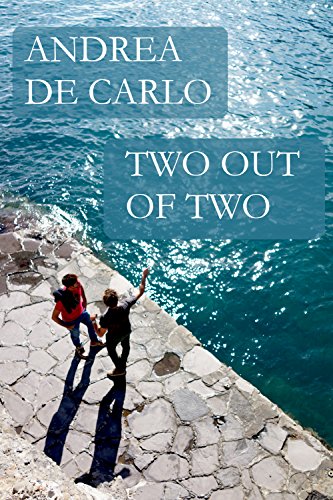
Mario and Guido are two teenage friends, so different as to be mirror images of one another. Mario is timid, reflective, afraid of life and undecided whenever faced with choices. Guido is charismatic, inventive, restless and courageous to the point of recklessness.
The two meet at their high school in Milan during the tumultuous years of student unrest in the late ‘60s. The closer Mario becomes to Guido, the son of a single working-class mother, the more he detests his own bourgeois background, and is frustrated by his utter lack of power to change a life he finds meaningless.
The relationship between Mario and Guido is forged as the two adolescents become young men determined to escape the grim atmosphere of Milan, where they do not fit in with the fighting factions of the student movement, with their families, or with society itself. They experience their first loves and travel abroad together; they share exciting discoveries and inevitable disappointments; they are simultaneously inseparable and incompatible.
Each of the two feels alienated, and in his own way, opts out of a lifestyle created by previous generations of corrupt politicians, greedy industrialists and an emotionally dead society enslaved to material values. Mario’s confused search for balance will lead him to the hills of central Italy where he dreams of creating a harmonious natural environment in which to live, while Guido’s anger will propel him to far-flung destinations and the writing of a novel in which he denounces the polluted, unnatural environment of modern city life.
Despite their differences and the distances that often separate them, the bond between Mario and Guido is unbreakable, making this a poignant story of unflagging friendship and enduring affection that survives the passage of time, the constrictions of adulthood, and repeated tests of loyalty.
______________________________


They’ve made a fresh start at the Pizzofalcone precinct of Naples. They fired every member of the investigative branch after they were found guilty of corruption. Now, there’s a group of detectives, a new commissario, and a new superintendent. The new cops immediately find themselves investigating a high-profile murder that has the whole town on edge.
Heading the investigation is Inspector Lojacono, known as “the Chinaman,” a cop with a checkered past who is currently riding a reputation as a crack investigator after having captured a serial killer known as “The Crocodile.” Lojacono’s partner is Aragona, who wants to be known as “Serpico,” but the name doesn’t stick. Luigi Palma, a.k.a. “Gigi,” is the commissario, Francesco Romano, known as “Hulk,” is the slightly self-deluded lieutenant. Lojacono, Aragona, Palma, and Romano are joined by a cast of cops portrayed by bestselling author Maurizio de Giovanni with depth and intimate knowledge of the close-knit world of police investigators.
De Giovanni’s award-winning and bestselling novels, all set in Naples, offer a brilliant vision of the criminal underworld and the lives of the cops in Europe’s most fabled, atmospheric, dangerous, and lustful city.
______________________________
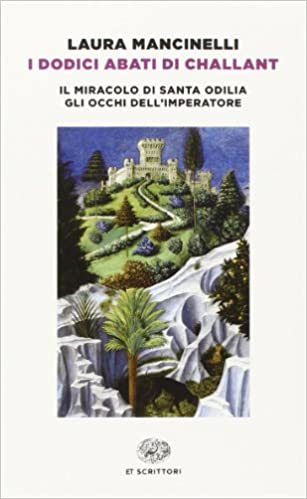

A feudal lord inherits a castle with the condition of maintaining faith in an evil obligation of chastity. Twelve abbots take on the task of watching over the commitment, but they all disappear in a succession of mysterious deaths, victims of banal and emblematic incidents. Beautiful and unscrupulous Madonnas, castellans and priests, philosophers persecuted by the Inquisition, squires and monks, devils and sulphurous spells, testamentary readings and carnal temptations, audacious and holy tetragons and then again … the beautiful Maravì sleepless in love, nostalgia, evening horseback riding, inventors and transplant surgeons in the odor of heresy and even a child and his cat Miro.
In the novel many characters are presented, some appearing only in one chapter (like the merchant, the inventor, the astrologer), others who return after some time for a brief appearance (like the troubadour and the philosopher). Each of them represents a social class of the Middle Ages.
______________________________
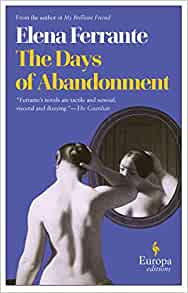
The Days of Abandonment is the gripping story of an Italian woman’s experiences after being suddenly left by her husband after fifteen years of marriage. With two young children to care for, Olga finds it more and more difficult to do the things she used to: keep a spotless house, cook meals with creativity and passion, refrain from using obscenities. After running into her husband with his much-younger new lover in public, she cannot even refrain from assaulting him physically.
In a “raging, torrential voice” (The New York Times), Olga conveys her journey from denial to devastating emptiness―and when she finds herself literally trapped within the four walls of their high-rise apartment, she is forced to confront her ghosts, the potential loss of her own identity, and the possibility that life may never return to normal
______________________________

Often likened to Kafka’s The Castle, The Tartar Steppe is both a scathing critique of military life and a meditation on the human thirst for glory. It tells of young Giovanni Drogo, who is posted to a distant fort overlooking the vast Tartar steppe. Although not intending to stay, Giovanni suddenly finds that years have passed, as, almost without his noticing, he has come to share the others’ wait for a foreign invasion that never happens. Over time the fort is downgraded and Giovanni’s ambitions fade―until the day the enemy begins massing on the desolate steppe…
______________________________

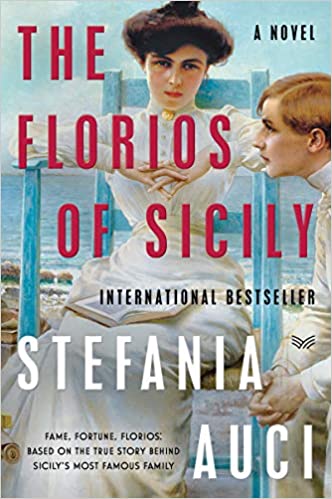
Based on the true history of the uncrowned kings of Sicily: the story of a family, restless and ambitious, shrewd and determined to be richer and more powerful than anybody else.
In this grand, sweeping epic inspired by the real lives of history-making titans, international best-selling author Stefania Auci brings to life the dark secrets, the loves and betrayals, and the cruel acts of revenge that marked the Florio family’s century of influence.
The Florios arrive in Sicily, with nothing but the clothes on their back after an earthquake destroys their hometown. Against all odds, the family begins anew despite the looming Napoleonic wars and devastating plagues. But when Vincenzo is spurned by his aristocratic lover, he vows to avenge his honor by becoming the wealthiest man in Italy. Sacrificing love and family, he strives to buy what cannot be his by birth. Not to be outdone by the men, the Florio women unapologetically demand their place outside the restraints of caring mothers, alluring lovers, or wounded wives. Giulia, though only a mistress, is fiercely intelligent and runs the empire from the shadows. Angelina, born a bastard, charts her own future against the wishes of her father.
In this epic yet intimate tale of power, passion, and revenge, the rise and fall of a family taps into the universal desire to become more than who we are born as.
____________________
The novel opens with a brief prologue set in 1957 in which the narrator, an Italian Jew, describes a visit to the Ferrara cemetery where the Finzi-Contini family mausoleum stands, empty in all but two slots: a young child, Guido, who died of illness before the narrator was born; and Alberto, the son of the Finzi-Continis and a friend of the narrator’s, who died of lymphogranulomatosis (Hodgkin’s disease) before the mass deportation that sent the remainder of the family to a concentration camp in Germany. At this point, the narrator reveals that none of the Finzi-Continis survived.
The first part of the book covers the narrator’s childhood experiences, describing the various social circles of the local Jewish population and the mystery around the Finzi-Contini children, Alberto and Micòl, who were schooled separately from the other Jewish children and who only appeared at the main school for the annual exams. The narrator fails his math test in this particular year, the first time he has failed any of the annual exams required for promotion, and he takes off on his bike out of fear of his father’s reaction. He ends up outside the walls of the Finzi-Continis’ mansion, where he has a conversation with Micòl, the Finzi-Continis’ pretty daughter. The narrator is invited by Micòl to enter the garden. He excuses himself out of concern for the safety of his bicycle. She then comes over the wall to show him a safe hiding place, but while hiding his bike he dallies in contemplation of Micòl – and loses his chance to see the garden until years later.
The next two parts of the book cover the years when the children are all in or just out of college. The racial laws have restricted their ability to socialize with the Ferrarese Christians, and so the narrator, Alberto, Micòl, and Giampi Malnate (an older Christian friend with socialist views) form an informal tennis club of their own, playing several times a week at the court in the Finzi-Continis’ garden. During these visits, the narrator declares, shyly at first but more and more forcefully, his love for Micòl. However, her attitude towards the narrator remains one of friendship so that the relationship slowly peters out.
The final section of the book covers the slow fading of the narrator’s involvement in the tennis club, his futile attempts to restart the romance with Micòl, and his growing friendship with Malnate whom he suspects at the end of the book of having an affair with Micòl.
______________________________

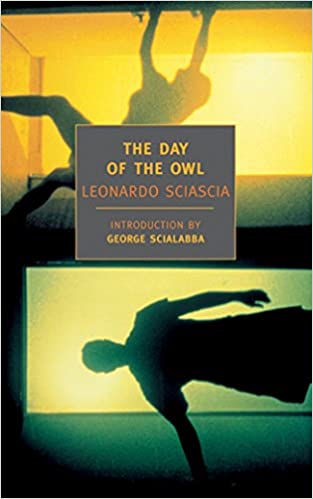
A man is shot dead as he runs to catch the bus in the piazza of a small Sicilian town. Captain Bellodi, the detective on the case, is new to his job and determined to prove himself. Bellodi suspects the Mafia, and his suspicions grow when he finds himself up against an apparently unbreachable wall of silence. A surprise turn puts him on the track of a series of nasty crimes. But all the while Bellodi’s investigation is being carefully monitored by a host of observers, near and far. They share a single concern: to keep the truth from coming out.
______________________________
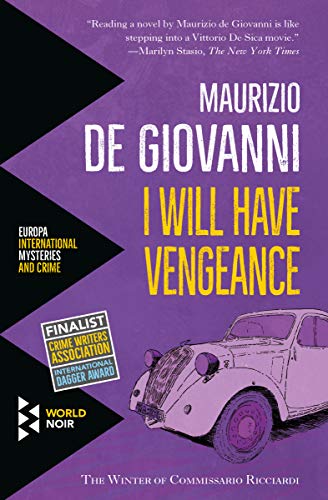
Commissario Ricciardi has visions. He sees the final seconds in the lives of victims of violent deaths. It is both a gift and a curse. It has helped him become one of the most successful homicide detectives on the Naples police front. But the horror of his visions has hollowed him out emotionally. He drinks too much and sleeps too little. Other than his loyal partner, Brigadier Maione, he has no friends.
Naples, March 1931. A bitter wind stalks the city streets, and murder lies at its cold heart. When the world’s greatest tenor, Maestro Arnaldo Vezzi, is found brutally murdered in his dressing room at Naples’ San Carlo Theatre, the enigmatic and aloof Commissario Ricciardi is called in to investigate.
Arrogant and bad-tempered, Vezzi was adored by millions and hated by hundreds, but with the livelihoods of everyone at the San Carlo opera at stake, who there would have committed such an act? Ricciardi is determined to find out.
______________________________
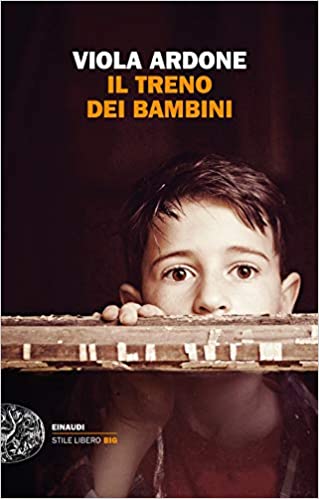
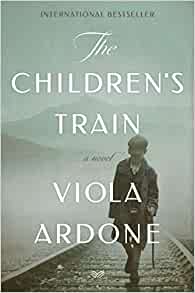
Based on true events, a heartbreaking story of love, family, hope, and survival set in post-World War II Italy—written with the heart of Orphan Train and Before We Were Yours—about poor children from the south sent to live with families in the north to survive deprivation and the harsh winters.
Though Mussolini and the fascists have been defeated, the war has devastated Italy, especially the south. Seven-year-old Amerigo lives with his mother Antonietta in Naples, surviving on odd jobs and his wits like the rest of the poor in his neighborhood. But one day, Amerigo learns that a train will take him away from the rubble-strewn streets of the city to spend the winter with a family in the north, where he will be safe and have warm clothes and food to eat.
Together with thousands of other southern children, Amerigo will cross the entire peninsula to a new life. Through his curious, innocent eyes, we see a nation rising from the ashes of war, reborn. As he comes to enjoy his new surroundings and the possibilities for a better future, Amerigo will make the heartbreaking choice to leave his mother and become a member of his adoptive family.
Amerigo’s journey is a moving story of memory, indelible bonds, artistry, and self-exploration, and a soaring examination of what family can truly mean. Ultimately Amerigo comes to understand that sometimes we must give up everything, even a mother’s love, to find our destiny.
______________________________


Italy, 1970s. Like many marriages, Vanda and Aldo’s has been subject to strain, attrition, and the burden of routine. Yet it has survived intact. Or so things appear. The rupture in their marriage lies years in the past, but if one looks closely enough, the fissures and fault lines are evident. It is a cracked vase that may shatter at the slightest touch. Or perhaps it has already shattered, and nobody is willing to acknowledge the fact.
Domenico Starnone’s thirteenth work of fiction is a powerful short novel about relationships, family, love, and the ineluctable consequences of one’s actions. Known as a consummate stylist and beloved as a talented storyteller, Domenico Starnone is the winner of Italy’s most prestigious literary award, the Strega.
______________________________


______________________________

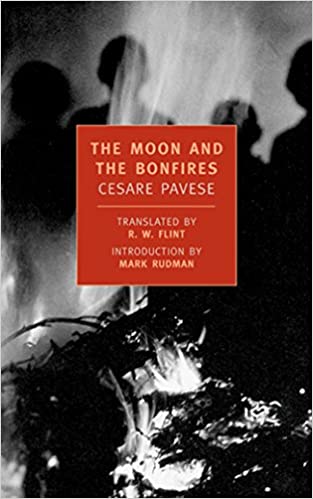
The nameless narrator of The Moon and the Bonfires, Cesare Pavese’s last and greatest novel, returns to Italy from California after the Second World War. He has done well in America, but success hasn’t taken the edge off his memories of childhood, when he was an orphan living at the mercy of a bitterly poor farmer. He wants to learn what happened in his native village over the long, terrible years of Fascism; perhaps, he even thinks, he will settle down. And yet as he uncovers a secret and savage history from the war—a tale of betrayal and reprisal, sex and death—he finds that the past still haunts the present. The Moon and the Bonfires is a novel of intense lyricism and tragic import, a masterpiece of twentieth-century literature that has been unavailable to American readers for close to fifty years. Here it appears in a vigorous new English version by R. W. Flint, whose earlier translations of Pavese’s fiction were acclaimed by Leslie Fiedler as “absolutely lucid and completely incantatory.”
______________________________

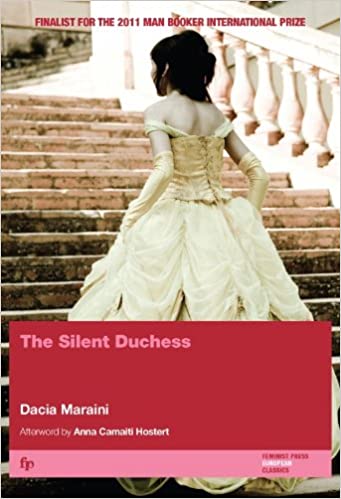
Winner of the Premio Campiello, short-listed for the Independent Foreign Fiction Award, and published to critical acclaim in fourteen languages, this “spellbinding” historical novel by one of Italy’s premier authors is now available in this luminous new translation (Booklist).
In early 18th century Sicily, noblewoman Marianna Ucrìa is trapped in a world of silence after a terrible childhood trauma left her deaf and mute. Married off to a lecherous uncle, she struggles to educate and elevate herself against all convention—and find her true place in a world that sees her as little more than property.
In language that conveys the keen vision and deep human insight possessed by her protagonist, Dacia Maraini captures the splendor and the corruption of Marianna’s world, as well as the strength of her unbreakable spirit, in “one of those rare, rich, deep, strange novels that create a world so fantastic and so real you want to start reading it again as soon as you come to the last page” (Newsday).
______________________________

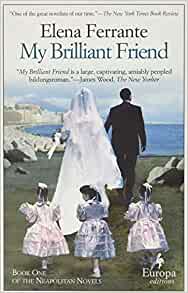
Beginning in the 1950s in a poor but vibrant neighborhood on the outskirts of Naples, Elena Ferrante’s four-volume story spans almost sixty years, as its main characters, the fiery and unforgettable Lila and the bookish narrator, Elena, become women, wives, mothers, and leaders, all the while maintaining a complex and at times conflicted friendship. This first novel in the series follows Lila and Elena from their fateful meeting as ten-year-olds through their school years and adolescence.
Through the lives of these two women, Ferrante tells the story of a neighborhood, a city, and a country as it is transformed in ways that, in turn, also transform the relationship between two women.
______________________________


Giovanna’s pretty face is changing, turning ugly, at least so her father thinks. Giovanna, he says, looks more like her Aunt Vittoria every day. But can it be true? Is she really changing? Is she turning into her Aunt Vittoria, a woman she hardly knows but whom her mother and father clearly despise? Surely there is a mirror somewhere in which she can see herself as she truly is.
Giovanna is searching for her reflection in two kindred cities that fear and detest one another: Naples of the heights, which assumes a mask of refinement, and Naples of the depths, a place of excess and vulgarity. She moves from one to the other in search of the truth, but neither city seems to offer answers or escape.
______________________________
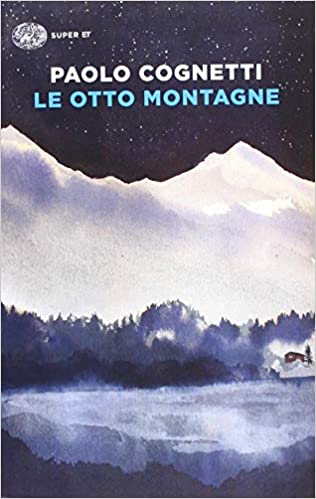
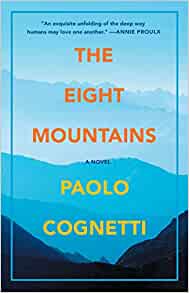
While on vacation at the foot of the Aosta Valley, Pietro meets Bruno, an adventurous, spirited local boy. Together they spend many summers exploring the mountains’ meadows and peaks and discover the similarities and differences in their lives, their backgrounds, and their futures. The two boys come to find the true meaning of friendship and camaraderie, even as their divergent paths in life—Bruno’s in the mountains, Pietro’s across the world—test the strength and meaning of their connection.
______________________________


Family Lexicon is about a family and language—and about storytelling not only as a form of survival but also as an instrument of deception and domination. The book takes the shape of a novel, yet everything is true. “Every time that I have found myself inventing something in accordance with my old habits as a novelist, I have felt impelled at once to destroy [it],” Ginzburg tells us at the start. “The places, events, and people are all real.”
______________________________
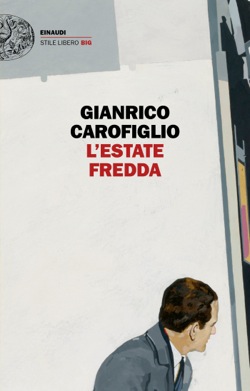

On May 23, 1992, a roadside explosion killed the Palermo judge Giovanni Falcone, his wife and three police officers. A few weeks later judge Paolo Borsellino and five police officers were killed in the center of Palermo. These anti-mafia judges became heroes but the violence spread to the region of Bari in Puglia, where we meet a new, memorable character, Maresciallo Pietro Fenoglio, an officer of the Italian Carabinieri.
Fenoglio, recently abandoned by his wife, must simultaneously deal with his personal crisis and the new gang wars raging around Bari. The police are stymied until a gang member, accused of killing a child, decides to collaborate, revealing the inner workings and the rules governing organised crime in the area.
The story is narrated through the actual testimony of the informant, a trope reminiscent of verbatim theatre which Carofiglio, an ex-anti-mafia judge himself, uses to great effect. The gangs are stopped but the mystery of the boy’s murder must still be solved, leading Fenoglio into a world of deep moral ambiguity, where the prosecutors are hard to distinguish from the prosecuted.
______________________________

_______________________________
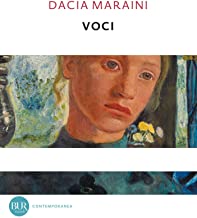
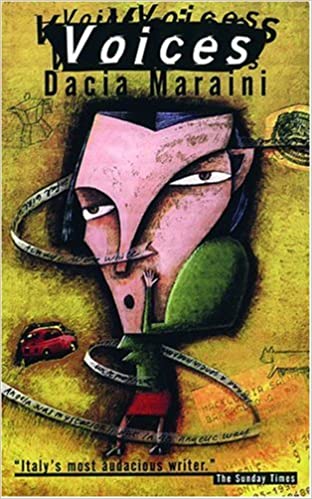
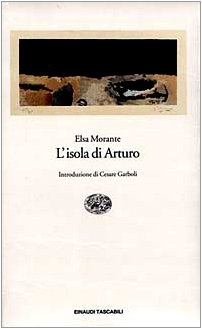
Coincidentally, she is asked to prepare a series on crimes against women. Researching the programmes, Michela Canova is forced to confront the every day horror and violence of big city life.
Did Angela Bari, seemingly so sweet and fragile, drive her many admirers to the very limit of sexual frenzy until one of them exploded in an orgy of hatred and loathing? And why does she, Michela Canova, see the same pattern of incitement and repulsion repeat itself in her own relationships?
Once again, Dacia Maraini asks fundamental questions about the human condition.
How much can individuals escape patterns of domination, of male domination, that are in place the world over?
 Romanzi Italiani